CAIHR-25 Symposium: Celebrating a Legacy of Impact and Innovation in Caribbean Health
A Milestone Gathering
The Caribbean Institute for Health Research (CAIHR) celebrated its 25th anniversary with a two-day symposium on June 3–4, 2025, hosted at The University of the West Indies’ Regional Headquarters. The event brought together academics, policymakers, institutional partners, and early-career researchers from across the region. Themed “Impacting Health in the Caribbean and Beyond”, the symposium reflected on CAIHR’s 25-year journey, its impact on health and policy, explored new areas of research, and outlined strategies for future growth and sustainability in light of changing regional and global trends.
Keynote Reflections: Securing the Future of the Next Generation
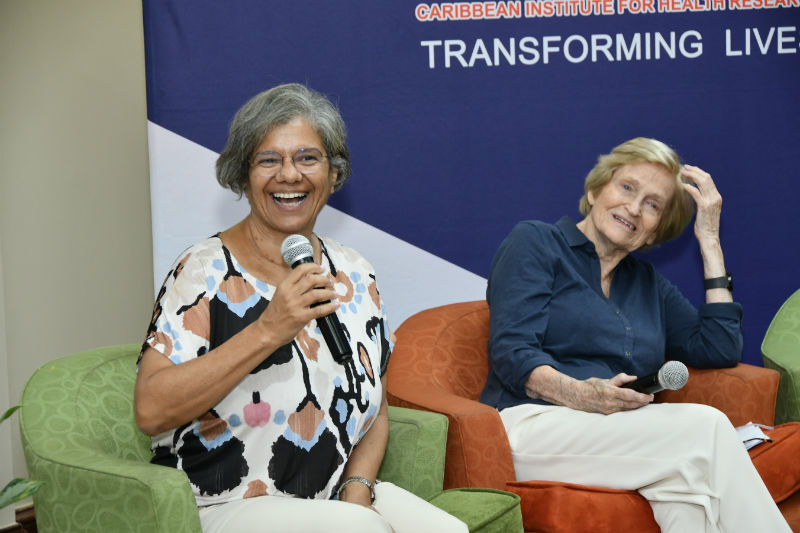
The keynote presentation was given by CAIHR’s first female Director, recently retired Professor Emerita Susan Walker. Professor Walker presented highlights from her nearly 40 years of research developing, evaluating and implementing structured, evidence-based early childhood stimulation and supplementation interventions and the lasting benefits of these interventions for children and families. She emphasized the importance of considering feasibility, adaptability, and innovation in program design as we seek to scale up these interventions to allow more families to benefit. The presentation was followed by an interactive panel discussion in which Professor Walker was joined by Professor Sally Grantham-McGregor, a Pioneer of Child Development Research in Jamaica and the founder of CAIHR’s Child Development Research Group. They shared how they identified the need for these interventions following early studies assessing child development that demonstrated the impact of undernutrition on development and the wide gap in developmental linked to poverty. These studies informed the development of a low cost, early childhood intervention which could be delivered by parents. The evidence generated showed the potential to address many of the current disparities in educational attainment and economic earning facing Jamaica and other low and middle income countries. They spoke about the challenges and successes achieved through key partnerships with the Government, and agencies such as UNICEF and IDB, to make this intervention a part of routine childcare in Jamaica and next steps in ensuring the sustainability of these efforts.
Our second session addressed current research activities focused on embedding parenting interventions into well baby clinic visits in the primary health care system in Jamaica through a partnership with the Ministry of Health and Wellness and increased Global Access to the tools for building early childhood intervention programmes through the REACH UP programme. Other interventions have been developed by the Child Development Group to address child development needs in pre-schools by supporting teachers and parents - through the IRIE Classroom and IRIE Homes toolkits. These have been demonstrated to reduce violence and improve child behaviour in early childhood institutions and early primary school grades. A lively panel discussion that included the presenters (Dr. Susan Chang-Lopez, Dr. Joanne Smith and Mrs. Marsha Bowers) and representatives of the Early Childhood Commission and the Jamaica Ministry of Health of Health highlighted key achievements in integrating these finding into policy. The panel also discussed the potential for these interventions to be integrated into other social interventions such as those being conducted in high crime communities in Jamaica as part of the Zones of Special Operation community strengthening initiatives.
Non-Communicable Diseases.
Professor Marshall Tulloch-Reid presented the design and lessons learned from implementing the Caribbean and South America Team-based Strategy to Control Hypertension (CATCH) study, a cluster randomized trial conducted in Jamaica and Colombia, to evaluate the use of health coaching, single pill combination medications, home blood pressure monitoring and a patient-centred team-based approach to lower blood pressure.
Professor Trevor Ferguson presented findings from the recently completed National Salt Survey and spoke about the use of low sodium, potassium-enriched salt to replace normal salt products as a cost effective population based strategy to lower blood pressure and reduce heart disease - the leading cause of premature death in Jamaica and the Caribbean. Discussions highlighted work being done by PAHO and the IDB to strengthen primary care services and improve blood pressure management and plans for collaboration to address this important health issue.
Successes from the work of the Sickle Cell Unit were discussed under the theme “Winning with Sickle Cell Disease”. This has been demonstrated in the work of the national sickle cell disease (SCD) newborn screening (NBS) program, presented by Dr. Lesley King. Professor Monika Asnani showed how the findings from the Jamaica Sickle Cell Cohort (Follow Up) Study had been helpful in forming guidelines for clinical care of persons living with sickle cell disease nationally and many other parts of the region.
Dr. Angela Rankine-Mullings spoke about work done to evaluate new treatments such as hydroxyurea which can prevent many of the severe complications of sickle cell disease and the need to improve use of these drugs while Dr. Zachary Ramsay demonstrated how large databases (big data) such as the sickle cell clinic records could be used with AI tools to improve clinical care. Significant progress had been made in SCD care in Jamaica mainly through the work of the Sickle Cell Technical Working Group (SCTWG), an initiative of the Ministry of Health & Wellness, Jamaica. This partnership includes academics and clinical leads from the Sickle Cell Unit, the Ministry of Health and Wellness Family Health and NCD programmes, Regional Health Authorities, patient advocates /persons living with SCD, and national laboratory experts. Chair of the SCTWG, Dr. Carol Lord and other key members of the TWG were able to share their perspectives on next steps and the way forward for addressing the needs of persons living with and affected by SCD and how the work of the Sickle Cell Unit will continue to contribute to improving outcomes.
Professor Simon Anderson focused on Interventions to improve health by addressing early life and nutritional risk factors. He demonstrated the long-term cardiovascular risks stemming from hypertensive disorders in pregnancy and gestational diabetes and outlined a new study to be rolled out in Jamaica, Dominica and Guyana that would focus on identifying mothers at high risk through antenatal clinic visits and implementing strategies to address risk factors for heart disease and poor mental health. Dr. Madhuvanti Murphy presented on the Community Food for Planetary Health project, a project stemming concerns about food security for the region coming out of the 2007 Port of Spain Declaration. The challenges the Caribbean faces from Globalization and climate vulnerabilities are also experienced by persons living in small island developing states around the world and a global strategy to address this challenge would ne needed. In a final presentation before the Panel Discussion Mrs. Euette Mundy-Parkes provided a detailed account of how food insecurity and economic constraints influence household nutrition choices, particularly in vulnerable populations.
Two studies are currently being conducted to address the concerns about climate change and health in CAIHR. Dr. Joanne Smith-Burke shared updates on the Global Diet and Physical Activity Network (GDAR) SPACES project which investigates the global syndemic of climate changes and urbanization on physical activity and nutrition in the Caribbean and Africa – understanding what may be influencing decision making and action in these areas. Dr. Georgiana Gordon-Strachan addressed the multifaceted health impacts of climate change, especially for Small Island Developing States. This panel discussion that included Climate Experts from other UWI Departments and an IDB representative spoke to the urgent need to develop track the impact of climate change on health, build climate-resilient health systems and the take an interdisciplinary approaches that bridge public health, environmental science, and policy.
The Way Forward - Concluding sessions
The concluding session for Day 2 focused on sustaining and expanding CAIHR’s research impact. A panel of experts explored innovative strategies for research financing. The Youth Voices segment featured early-career researchers—Dr. Daniel Thomas and Dr. Keshagaye Alexander-Gabbadon—who shared their visions for the future. From a poll of these members of staff critical needs included mentorship pipelines, grant funding opportunities for early career researchers, and the infrastructure to support the use of digital tools and AI in research activities.
Dr. David McBean, Executive Director of the Mona School of Business and Management (MSBM) and Professor Susan Walker joined Professor Tulloch-Reid in a frank discussion on financing research in the Caribbean in light of the shifting areas of funding. The critical importance of
- Strategic marketing and communication of research findings to key stakeholders using the right channels and the right persons
- Innovative approaches to funding and grant acquisition by demonstrating the value of the contributions from our research work
- Cross-sector collaboration with agencies outside of health and NGOs while negating conflicts of interest.
Conclusion: A Vision for the Future
The CAIHR-25 Symposium not only celebrated a rich legacy but also created a blueprint for future research, innovation, and advocacy. With strong leadership, a growing network of early career researchers, and a network of committed partners, CAIHR is poised to continue driving impactful change in Caribbean and global health for years to come.


