Specialised centres, units, institutes and departmental reports
The Hugh Wynter Institute for Reproductive healthcare and Endoscopic Surgery

The Hugh Wynter Institute for Reproductive Healthcare and Endoscopic Surgery (HWI-RHES) continued its mission as a Centre of Excellence in reproductive health, achieving significant expansion in access to specialised healthcare, postgraduate education, and community engagement.
ACCESS AND CLINICAL PERFORMANCE
The Institute maintained its commitment to high-quality assisted reproductive technologies, minimally invasive gynaecologic surgery, contraceptive care, and fertility education. The Master of Science in Counselling Programme enrolled twenty-nine continuing and nine new students, successfully delivering the curriculum predominantly online to increase accessibility. Orientation sessions and support meetings facilitated students’ research and practicum activities.
Assisted conception services were accessed by fifty-one couples and one single woman. Infertility factors were found in both male and female patients, with female factors more prevalent. Thirty-two pregnancies were achieved, resulting in twenty-six confirmed clinical pregnancies, six biochemical pregnancies, and sixteen live births (including triplets and twins). Despite a decline from the previous year, patient engagement and demand remained strong, reflecting the Institute’s reputation and reliability.
Comprehensive family planning and surgical services were sustained, with 968 patients accessing contraceptive services—886 returning and 82 new. The most frequently performed surgeries included diagnostic hysteroscopy (125 cases), operative laparoscopy (62 cases), and hysteroscopy with suction curettage (29 cases), among other reproductive procedures. Hysteroscopic and laparoscopic interventions reinforced the Institute’s leadership in minimally invasive surgery and family planning.
ALIGNMENT WITH INDUSTRY AND ACADEMIA
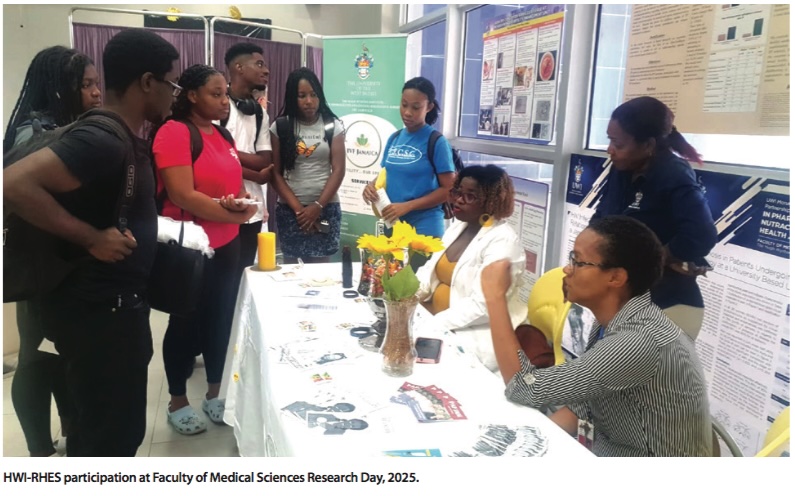
The Institute strengthened industry- academic partnerships through enhanced public engagement, social media activity, and strategic alliances with national broadcasters and civic organisations. Digital engagement, especially among women aged 25–44, grew steadily on Instagram and Facebook, with primary engagement in Kingston and notable reach in the United States, Canada, and Trinidad and Tobago.
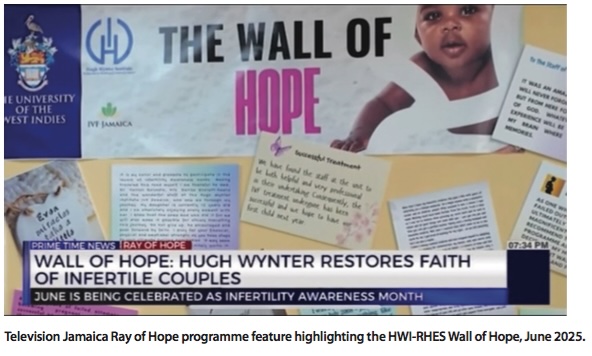
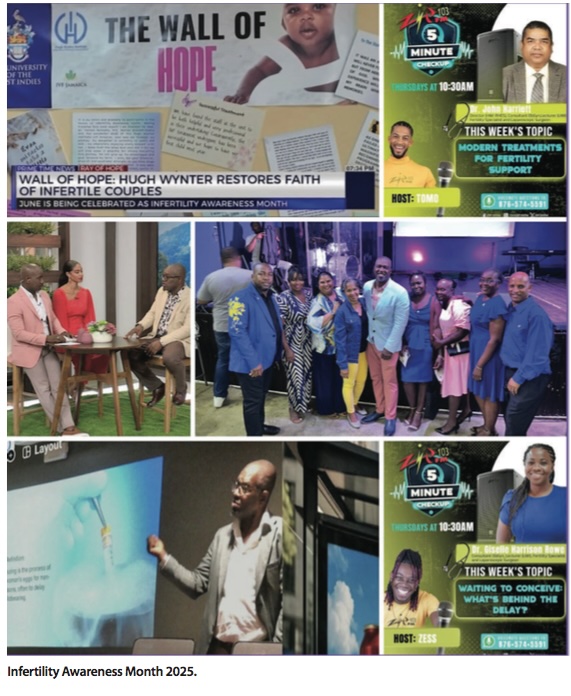
A key highlight was the national Roundtable Talk on Jamaica’s declining fertility rate, which drew broad participation from academic and industry leaders and received extensive media coverage. The Institute also marked Endometriosis and Infertility Awareness Months with educational radio segments, community outreach, and patient storytelling, including the nationally televised Wall of Hope segment to reduce stigma. Corporate outreach and community engagement were expanded through talks, interviews, and social media campaigns.
AGILITY AND INNOVATION
The Institute demonstrated operational agility, with staff serving on regional and international professional bodies representing the University. Financially, income grew by 1.53% to J$269.9 million, but operating costs rose by 16.45%, driven mainly by equipment procurement, medications, staffing, and infrastructure repairs. This resulted in a 33.8% decrease in net profit to J$52.3 million.
Programme continuity was ensured in the MSc Counselling Programme despite a leadership transition. The Institute operated under the theme “Restore- Rebuild-Reimagine,” focusing on process improvement and service quality. Innovation was evident in expanded digital engagement and multimedia public health communication, including livestreaming, video series, and community initiatives, which enhanced public understanding and strengthened the Institute’s social impact.
Conclusion
The Institute’s progress was due to collaborative efforts among academic staff, clinicians, counsellors, students, and partners. These accomplishments expanded access to education and healthcare, strengthened links between the University and national needs, and enhanced the Institute’s capacity to address evolving health and social challenges, in line with the University’s Triple A Strategy.