Specialised centres, units, institutes and departmental reports
Sir Arthur Lewis Institute of Social and Economic Studies (SALISES)
The Sir Arthur Lewis Institute of Social and Economic Studies (SALISES) continued its commitment to advancing scholarship that responds to the evolving needs of the Caribbean region. Against a backdrop of rapid social, economic, and technological change, SALISES focused on expanding access to tertiary education, strengthening partnerships, demonstrating agility, and fostering innovation.
Access to education was a central priority. The St. Augustine campus transitioned its flagship MSc Development Statistics and MPhil/PhD programmes to fully online delivery, expanding opportunities for working professionals across the Caribbean and the Global South. The campus produced 17 scholarly outputs to reinforce the research base for postgraduate training. At Cave Hill, MPhil/PhD programme admissions were carefully managed to maintain supervision standards, resulting in three new students and higher submission rates. Outreach initiatives targeted final-year students and the wider Barbadian community, with a major promotional campaign for the online MSc in Development Studies planned for March 2026. At Mona, scholarships totalling over J$3.8 million supported seven MSc students, and major datasets were secured to enhance research and teaching. The Norman Girvan Documentation Centre was also redesigned to better serve students.
Against a backdrop of rapid social, economic, and technological change, SALISES focused on expanding access to tertiary education, strengthening partnerships, demonstrating agility, and fostering innovation.
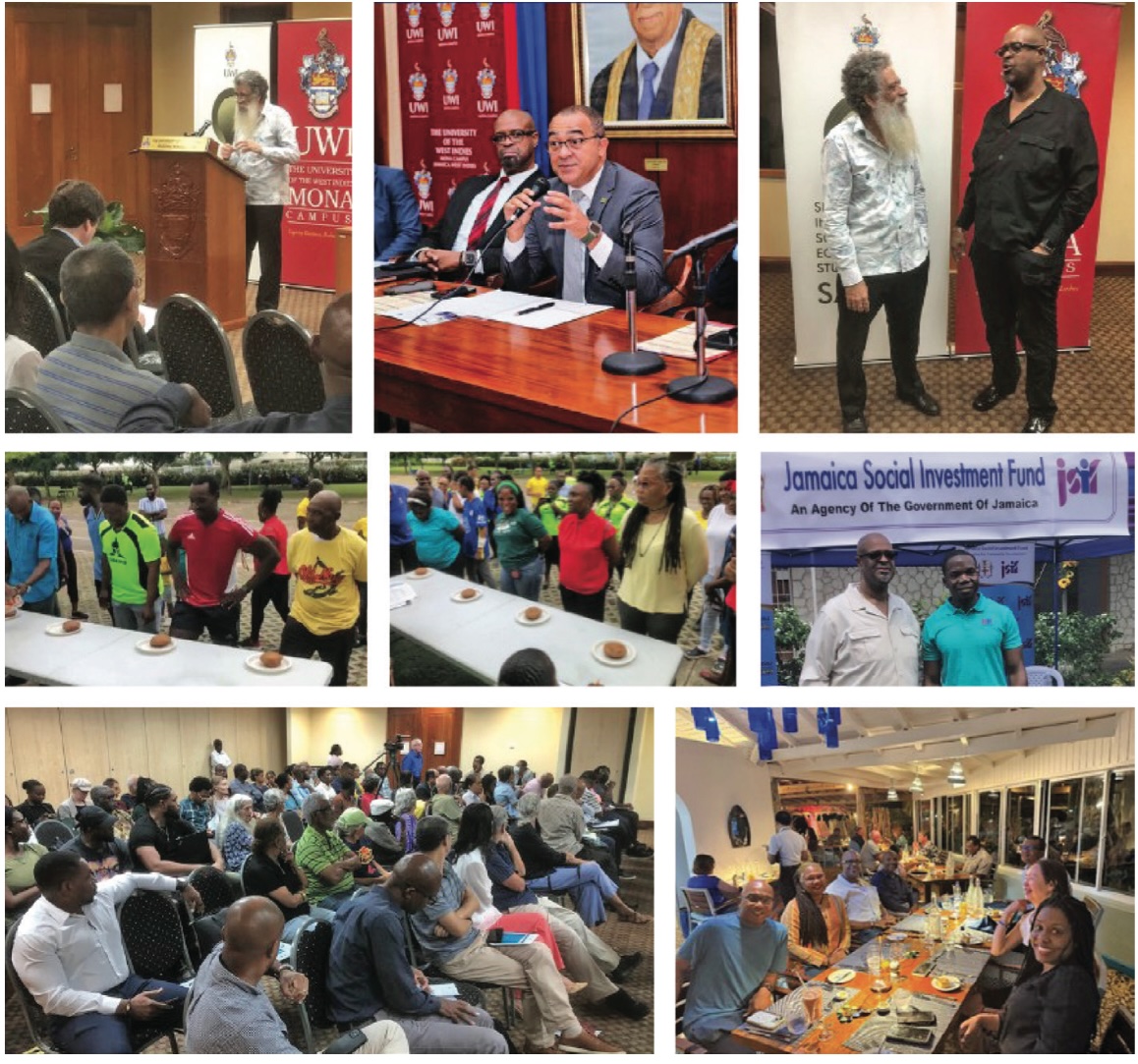
SALISES reinforced its alignment with industry, policy-makers, and global actors through impactful research and partnerships. At St. Augustine, the Institute led grant-funded projects on climate finance and disaster risk, solidifying its reputation as a thought leader for Small Island Developing States (SIDS). Staff achievements included international appointments and awards, as well as major publications on sport and migration. Cave Hill’s Centre for Criminal Justice and Security conducted national crime surveys, while collaborative efforts with the BVI and Turks and Caicos advanced research capacity and public policy analysis. Mona strengthened its international profile via the Erasmus+ Programme and hosted webinars on critical regional issues, enhancing scholarly output and engagement.
Agility in responding to changing environments was demonstrated through digital upgrades, expanded regional collaborations, and the formation of flexible research clusters at St. Augustine. Cave Hill responded to funding challenges by restructuring administrative support and upgrading research roles. Mona secured significant grants and increased tuition revenues, supporting projects on poverty, digital inclusion, and artificial intelligence.
Innovation and entrepreneurial initiatives were prominent. St. Augustine piloted a widely attended data visualisation workshop, informing plans for scalable, skills-based courses. Public fora were developed as digital knowledge products to support professional education. Cave Hill explored monetising research compilations, while Mona prepared to launch the SALISES GenAI4D Observatory Dashboard—a flagship platform to track and forecast the impact of generative AI in Jamaica and the Caribbean, supporting sustainable development and regional innovation.
Overall, SALISES’ strategic focus on access, alignment, agility, and innovation positioned the Institute to deliver tangible value to students, policy- makers, and society, while strengthening its research, teaching, and outreach across the Caribbean and beyond.